
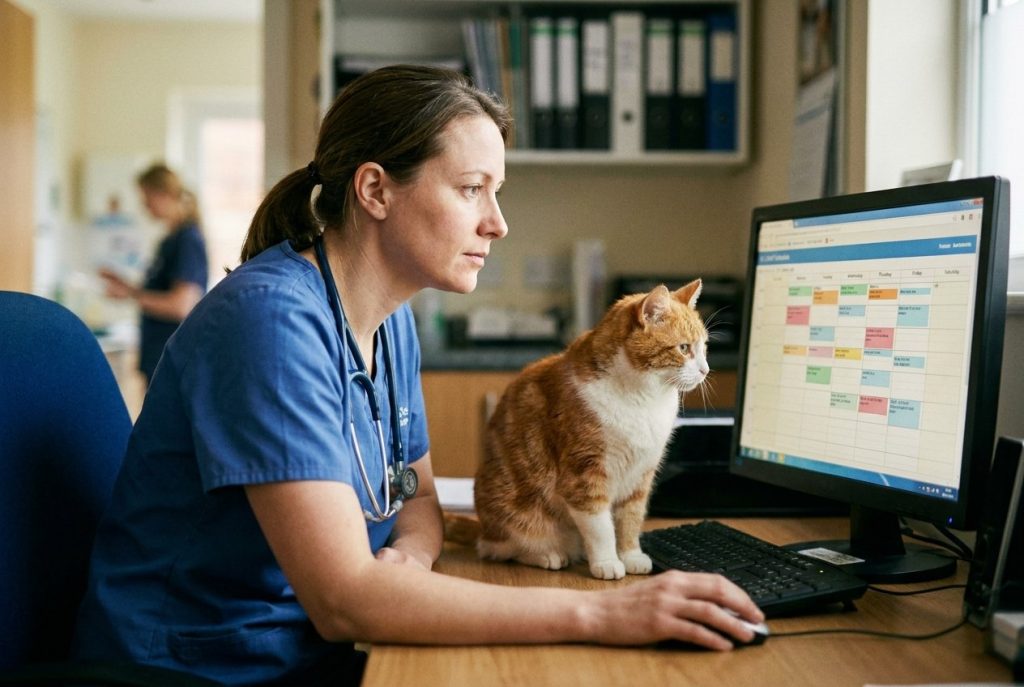
- The lawsuit almost never starts with a villain. It starts with a salaried tech, a kind manager who lets people clock out and “just finish up,” and a time system nobody audits. The exposure builds quietly for years.
- Five claim types drive most of it: unpaid overtime, off-the-clock work, exempt-vs-non-exempt misclassification, missed meal and rest breaks, and unpaid training or CE time. A salary does not make someone exempt.
- The cost is the wages times two, plus their lawyer. The Fair Labor Standards Act allows 2 years of back pay (3 if willful), an equal amount in liquidated damages, and attorney fees. One New York clinic paid $90,869.96 plus a matching penalty to 39 employees.
- Prevention is boring and it works: real timekeeping, a classification audit, written break policies, paid training time, and counsel in your state. None of it is expensive next to one collective action.
- This is exactly the kind of unglamorous risk a peer of your size has already lived. OwnerExchange is the community built only for owners of 3+ DVM practices doing $3 to $10M and up, where someone in the room has already survived the audit you’re worried about and will tell you how.
A few years back, an owner I know got a letter she wasn’t expecting.
It wasn’t from an angry client or a board complaint. It was from a lawyer, on behalf of a technician who had left eight months earlier on good terms. The claim was unpaid overtime. The tech had been salaried, the practice had assumed that settled the question, and for two years nobody had tracked the hours she actually worked past 40.
She wasn’t a bad employer. She was the opposite, the kind who covers a sick day herself and remembers everyone’s kids’ names. That’s almost always who this happens to. The owners who get blindsided by a wage claim are rarely cutting corners on purpose. They’re busy practicing good medicine and trusting that paying people fairly in spirit is the same as paying them correctly under the law. It isn’t.
I’m going to walk through how these cases actually start, what they cost, and the handful of fixes that close the gaps. None of this is legal advice, and your state’s rules may be stricter than the federal floor, so treat it as the map and bring in qualified counsel for the terrain.
What is a veterinary wage and hour lawsuit, exactly?
A veterinary wage and hour lawsuit is a claim that the practice violated federal or state pay law, most often by not paying overtime, paying for fewer hours than were truly worked, putting a non-exempt employee on salary to skip overtime, or denying required meal and rest breaks. The backbone is the federal Fair Labor Standards Act, which requires non-exempt employees to earn at least minimum wage plus 1.5 times their regular rate for every hour over 40 in a workweek (U.S. Department of Labor).
These claims arrive in three forms. A single employee files. A group files together as a collective or class action. Or the U.S. Department of Labor investigates and orders back pay directly, with no lawsuit at all.
The federal minimum wage has sat at $7.25 an hour since 2009, and many states set theirs higher (U.S. Department of Labor). The overtime rule is the part that bites veterinary practices, because clinical work runs long and busy days don’t end at hour eight.
The 5 claim types that put owners in the crosshairs
Strip away the legal labels and almost every veterinary wage claim is one of five things. Here’s how each one actually shows up in a practice, and the one move that prevents it.
| Claim type | How it happens in a real practice | The prevention step |
|---|---|---|
| Unpaid overtime | A non-exempt tech works 46 hours during a brutal week, but gets paid flat or “banked” for later. Under the FLSA, hours over 40 in that workweek must be paid at 1.5x in that workweek. | Pay overtime weekly on the regular rate. Never average two weeks together or bank hours for a slow week. |
| Off-the-clock work | The team clocks out, then “just finishes up” records, restocks, or closes the building. Opening and closing tasks are compensable work. | Require people to be on the clock for every work task. Train managers that “off the clock but still working” is the single most common trap. |
| Exempt vs. non-exempt misclassification | A practice manager or head tech is put on salary and treated as exempt, assuming salary equals no overtime. It doesn’t. | Audit every role against the duties test, not the pay type. When unsure, classify as non-exempt and pay overtime. |
| Missed meal and rest breaks | A 5-to-6-hour shift runs with no meal break, or a break gets interrupted by a walk-in. Many states mandate breaks and penalize misses. | Put break rules in writing, build them into the schedule, and document that breaks were taken (or properly waived where state law allows). |
| Unpaid training and CE time | Staff attend a Saturday lunch-and-learn or a required software training off the clock. Job-related training during or tied to work is usually paid time. | Pay for required training and meetings. Per DOL guidance, time is only non-compensable if it’s outside hours, voluntary, not job-related, and involves no productive work. |
Look down the middle column. Not one of those is a cartoon of a greedy owner. Every single one is an ordinary, well-meaning practice doing what feels reasonable and tripping a rule it didn’t know applied.
That’s the whole danger. The behaviors that create liability feel like generosity and hustle, not violations.
Why the salary myth causes more lawsuits than anything else
If I could fix one belief in this profession, it would be this one. Paying someone a salary does not make them exempt from overtime. It is the most expensive misunderstanding in veterinary HR, and it’s everywhere.
Exempt status has three locks, and all three have to open. The employee has to be paid on a salary basis. They have to clear the salary threshold, which is $684 a week federally in 2026, or $35,568 a year (the higher 2024 federal rule was vacated by a court in late 2024, so the 2019 number still governs nationally). And they have to primarily perform exempt executive, administrative, or professional duties (U.S. Department of Labor, Fact Sheet 17A).
That third lock is where veterinary roles fall out. Per dvm360 and DOL guidance, veterinary technicians, assistants, kennel staff, and receptionists are generally non-exempt and owed overtime no matter how they’re paid. Licensed veterinarians usually qualify under the learned-professional exemption. A practice manager might or might not, depending on what they actually do all day.
Here’s the part that changed the math for employers. In January 2025, the U.S. Supreme Court ruled in E.M.D. Sales, Inc. v. Carrera that an employer must prove an exemption by a “preponderance of the evidence” (Foley & Lardner; Justia). The standard isn’t punishing. But the burden is on you, the employer, to show the classification was right. If you can’t defend why the head tech was exempt, you lose, and you owe the back overtime.
So the salaried head technician you’ve “treated as management” for three years isn’t a settled fact. It’s an open question, and you’re the one who has to answer it.

What these cases actually cost
Owners hear “wage claim” and picture paying the missing overtime. The real number is bigger, and it’s the part that turns a bookkeeping slip into a six-figure event.
The Fair Labor Standards Act lets an employee recover back pay going back 2 years, or 3 years if the violation was willful. On top of the back wages, the law adds liquidated damages equal to the unpaid amount, so the wages effectively double. Then come the employee’s attorney fees and court costs, which the practice pays if it loses (U.S. Department of Labor). A two-year statute, doubled, multiplied across a whole clinical team, is how a “small” error becomes a number that keeps you up at night.
This isn’t hypothetical. In June 2022, the Department of Labor’s Wage and Hour Division recovered $90,869.96 in back wages, plus an equal amount in liquidated damages, for 39 employees of a single veterinary clinic in Unadilla, New York. The finding: the practice “banked” hours worked over 40 instead of paying time-and-a-half in the right week, then paid them later at straight time, and failed to keep accurate records (U.S. Department of Labor news release). No courtroom drama. Just a federal investigation and a bill.
And the trend line points up. Private FLSA cases in federal court rose to roughly 5,702 in 2025 from 5,456 the year before, and the Department of Labor recovered more in back wages in 2025 than in any year since 2019 (Seyfarth Shaw, Workplace Class Action data). In California, where many veterinary practices operate, Private Attorneys General Act filings have hovered above 9,000 a year (Seyfarth Shaw). Medical and professional-services employers are among the most regularly targeted.
One avoidable wage mistake can erase a year of hard-won profit. The owners who sleep well aren’t the ones who got lucky; they’re the ones who fixed their timekeeping and classification before anyone forced the question. See the room where owners trade these fixes →
A real veterinary case, reported neutrally
It helps to see a specific one, so let me describe a real veterinary wage case plainly, with no spin on any party.
In Bradsbery v. Vicar Operating, Inc., former employees who worked as a veterinary technician and a veterinary assistant brought a putative class action, filed in 2014, alleging they had worked shifts of five to six hours without a meal period (Vicar operates a network of veterinary hospitals). The case ran for years. In April 2025, the California Court of Appeal held that revocable, prospective written meal-period waivers signed by employees are enforceable for shifts of five to six hours, absent evidence the waivers were unconscionable or coercive (FindLaw; Stoel Rives). The judgment for the employer was affirmed.
I’m not pointing fingers at anyone in that case, and there’s no reason to. The useful lesson is structural, not moral. A meal-break question that originated more than a decade earlier was still being litigated in 2025. Wage and hour exposure has a long tail, and a written, properly executed policy is what gave the employer something solid to stand on.
The takeaway for your practice is simple. The policies you write today are the defense you’ll lean on years from now. Verbal understandings and “that’s just how we’ve always done it” are not policies.
The 6 fixes that keep you out of court
None of this is exotic. It’s a short list of unglamorous habits, and together they close the gaps that nearly every veterinary wage claim slips through.
- Track time for every non-exempt person, to the minute. The FLSA requires employers to keep accurate records of hours worked and wages paid; payroll records are kept 3 years and the underlying time records 2 years (DOL, Fact Sheet 21). A clean timekeeping system is both your compliance and your evidence.
- Audit classification by duties, not pay type. Go role by role. Ask what the person actually does most of the day, then test it against the executive, administrative, and professional duties standards. Default to non-exempt when it’s close.
- Pay overtime correctly, every week. Time-and-a-half on the regular rate for hours over 40, in the workweek they were earned. Don’t bank, don’t average across weeks, and remember the regular rate can include certain bonuses.
- Put meal and rest breaks in writing, then honor them. Build breaks into the schedule, train managers not to interrupt them, and document them. Where your state allows waivers, use proper written ones, as the Vicar case underscored.
- Pay for training and required CE time. If it’s job-related and tied to work, it’s almost certainly compensable. Use the DOL’s four-part test before you assume any training is free time.
- Follow the stricter of federal or state law, and get local counsel. State rules on daily overtime, breaks, and penalties vary widely. California, for instance, governs veterinary staff under Wage Order 5 with daily overtime past 8 hours (Wilke Fleury). Have qualified employment counsel in your state review your handbook and pay practices.
Do these six things and you’ve removed the fuel from almost every fire. The practices that get burned aren’t the ones who did something outrageous. They’re the ones who never got around to the boring list.

Why this gets harder as your practice grows
Here’s the uncomfortable part. The bigger and better your practice gets, the more exposure you carry, not less.
A solo owner with three staff can keep the whole pay picture in their head. A multi-doctor practice with 30 or 40 people across clinical, front desk, and management cannot. More employees means more roles to classify, more hours to track, more managers making judgment calls about who clocks out when. The same generous instinct that built your culture, “go ahead and finish up,” becomes a class-wide liability when 25 people do it every week.
And the math scales the wrong way. A single misclassified role is one person’s overtime. A misclassified job title held by eight people, over a two-year lookback, doubled in liquidated damages, is a different conversation entirely. Volume is exactly what turns a minor error into a collective action.
This is the quiet tax of success in this profession. The practices most worth suing are the ones that grew, hired, and never upgraded their pay infrastructure to match. The fix isn’t to stay small. It’s to build the boring systems before the size makes the gap dangerous.
Where a room of peers actually helps
You can read every fact sheet on the Department of Labor’s website and still not know what a real veterinary HR audit feels like, or which payroll system another multi-doctor owner swears by, or how a peer handled the exact letter that just landed on your desk. That knowledge doesn’t live in a statute. It lives in other owners who’ve already been through it.
That’s the gap OwnerExchange was built to close. It’s not another association or a vendor pitch. It’s a private community built only for owners of 3+ DVM practices doing $3 to $10 million and up, the sharpest 5 percent of independent owners, in a room where someone has already survived the audit, the misclassification scare, or the demand letter you’re worried about.
What that looks like in practice:
- Caliber-matched mastermind PODS. A small, curated group of owners at your scale, so the person across the table is wrestling with 40-person payroll complexity too, not a two-room startup.
- A private 24/7 forum. When a wage question lands on a Tuesday, you post it and owners who’ve handled the same thing answer, alongside a searchable archive of what the group has already worked through.
- The conversations that don’t fit anywhere else. Classification, compensation models, retention, the HR landmines nobody warns you about, and protecting the practice you built without losing the culture that made it worth building.
- No fluff, no vendors, no noise. Members describe it as a private boardroom of sharp owners trading what actually worked, not generic advice.
You’ll still need qualified counsel in your state, and nothing in a peer room replaces a real lawyer. But the difference between scrambling alone and asking a dozen owners who’ve already solved it is the difference between a crisis and a phone call.
What is OwnerExchange?
OwnerExchange is a private peer community for the sharpest 5% of independent veterinary practice owners: 3+ doctor practices doing $3 to $10 million and up. You join a small, caliber-matched mastermind POD led by a veterinary thought leader, plus a private 24/7 forum of owners who get exactly what your seat demands, from wage-and-hour risk to growth and succession. No fluff, no vendors, no noise. A new group of just 12 owners is forming now.
We’re selective on purpose. The room only works when every owner in it is operating at a level where these problems are real, and the answers are hard-won.
Further reading
If wage exposure is on your mind, these go deeper on the people decisions that sit right next to it.
- Veterinary human resources best practices — the staffing, classification, and policy decisions that prevent most pay disputes before they start.
- The challenges of veterinary practice ownership — the legal, financial, and people pressures that come with the seat, and how owners carry them.
- The veterinary practice owner community — who’s in the OwnerExchange room and how owners use each other to de-risk decisions like these.
Frequently asked questions
What is a veterinary wage and hour lawsuit?
A claim that a practice broke federal or state pay law: not paying overtime, paying for fewer hours than were actually worked, misclassifying a non-exempt employee as exempt, or skipping required meal and rest breaks. Under the Fair Labor Standards Act, a non-exempt employee must earn at least minimum wage plus 1.5 times their regular rate for hours over 40 in a workweek. It can be brought by one employee, a group, or the U.S. Department of Labor.
What are the most common wage and hour claims against veterinary practices?
The recurring ones are unpaid overtime, off-the-clock work, exempt-vs-non-exempt misclassification, missed meal and rest breaks, and unpaid training or CE time. Most trace to two root causes: assuming a salary makes someone exempt, and failing to capture every minute the team actually works.
Are veterinary technicians exempt from overtime?
Generally no. Per dvm360 and DOL guidance, technicians, assistants, kennel staff, and receptionists are typically non-exempt and owed overtime, whether paid hourly or salaried. Licensed veterinarians usually meet the professional exemption. A salary alone doesn’t create exempt status; the role must also pass the duties test, and the employer must be able to prove it.
How much can a veterinary wage and hour lawsuit cost?
More than the wages alone. The FLSA allows back pay for 2 years (3 if willful), plus an equal amount in liquidated damages and the employee’s attorney fees. In one 2022 case, a single New York veterinary clinic paid $90,869.96 in back wages plus a matching penalty to 39 employees.
How do I protect my veterinary practice from a wage and hour lawsuit?
Six steps cover most of the risk: keep accurate time records for every non-exempt person, run a classification audit on every role, pay overtime correctly on the regular rate, put meal and rest break rules in writing and enforce them, pay for all training and required CE time, and follow the stricter of federal or state law. Have qualified counsel in your state review your handbook and pay practices.
What is the difference between exempt and non-exempt employees in a veterinary practice?
A non-exempt employee must be paid overtime over 40 hours a week. An exempt employee isn’t owed overtime, but only qualifies if all three tests are met: salary basis, the salary threshold ($684 a week federally in 2026), and primarily performing exempt executive, administrative, or professional duties. Most clinical and front-desk roles don’t meet the duties test.
Sources
Federal wage and hour law and enforcement
- U.S. Department of Labor, Wage and Hour Division. “Overtime Pay” and “Wages and the Fair Labor Standards Act.” dol.gov
- U.S. Department of Labor. “Fact Sheet #17A: Exemption for Executive, Administrative, Professional, Computer & Outside Sales Employees Under the FLSA.” dol.gov
- U.S. Department of Labor. “Fact Sheet #21: Recordkeeping Requirements under the FLSA.” dol.gov
- U.S. Department of Labor. “Fact Sheet #22: Hours Worked Under the FLSA” (training, meeting, and lecture time). dol.gov
- U.S. Department of Labor. “Back Pay” (statute of limitations, liquidated damages). dol.gov
Real veterinary wage and hour matters
- U.S. Department of Labor news release (June 29, 2022). “US Department of Labor recovers $90K in back wages, liquidated damages for 39 employees of Otsego County, New York, veterinary clinic.” dol.gov
- FindLaw. “La Kimba Bradsbery v. Vicar Operating, Inc. (2025)” — California Court of Appeal opinion. caselaw.findlaw.com
- Stoel Rives LLP. “California Court of Appeal Confirms the Legality of Prospective Meal Period Waivers” (Bradsbery v. Vicar Operating). stoelrivesworldofemployment.com
Veterinary-specific classification and overtime guidance
- dvm360. “Veterinary employees: Exempt or non-exempt? That is the question!” dvm360.com
- Wilke, Fleury, Hoffelt, Gould & Birney, LLP. “California Adopts New Overtime Requirements for Veterinarians and Technicians Who Provide Animal Care” (Wage Order 5). wilkefleury.com
Litigation trends and the burden of proof on exemptions
- Foley & Lardner LLP. “Supreme Court’s E.M.D. Sales v. Carrera Decision: A Victory for Employers Navigating FLSA Exemptions.” foley.com
- Justia U.S. Supreme Court Center. “E.M.D. Sales, Inc. v. Carrera, 604 U.S. ___ (2025).” supreme.justia.com
- Seyfarth Shaw LLP. Workplace Class Action / Wage & Hour Litigation data (FLSA filing volumes; DOL recoveries; PAGA filings). wagehourlitigation.com
